Archive for May, 2014

May 21, 2014

The Secrets of R-Rated Comedy: Part I

kgby Angela Guess

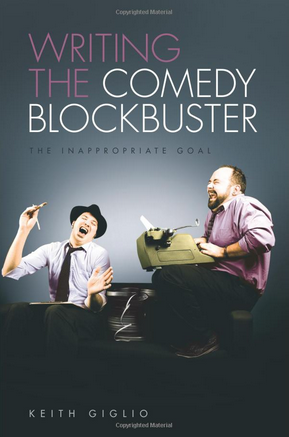
Keith is a bit of an expert in the field. His book, Writing the Comedy Blockbuster, shares the wisdom he’s gained over the years writing for such companies as Paramount, Walt Disney, Universal, Warner Brothers, and Spyglass. Keith, who was named UCLA Extension’s Instructor of the Year in 2009, currently teaches screenwriting at Syracuse University and enjoys every minute of it.

I heard Keith speak at the Great American Pitch Fest a few years back, and he didn’t disappoint. In this first half of our conversation, Keith and I discuss the basic structure of R comedies, the one rule of comedy, and setting inappropriate goals.

LA Screenwriter (LA): How’d you get your start as a screenwriter?

Keith Giglio (KG): I had gone to NYU grad, where I learned absolutely nothing about screenwriting. Then I wound up — because of a college buddy whose brother had worked at Saturday Night Live — I wound up, strangely enough, working as a writer’s assistant in Madison, NJ, for one of the hottest comedy writers of the time, Andy Breckman. I learned my trade working for him for about a year and a half, and then my wife and I left New York.

I had written a thriller, then we decided to write a comedy together. We sent it to four or five people, and someone liked it. It was kind of similar in tone to a Sleepless in Seattle… The next thing we knew we had an agent and the script was going out. After that, you know, you start to go to meetings, and then I guess our first break was writing Archie for Universal, which never got made. So I got my start like everyone else: just by writing scripts and sending them out.

May 21, 2014

Quote of the Day: Keith Giglio

I think the one rule of comedy is that things just keep getting worse.

May 20, 2014

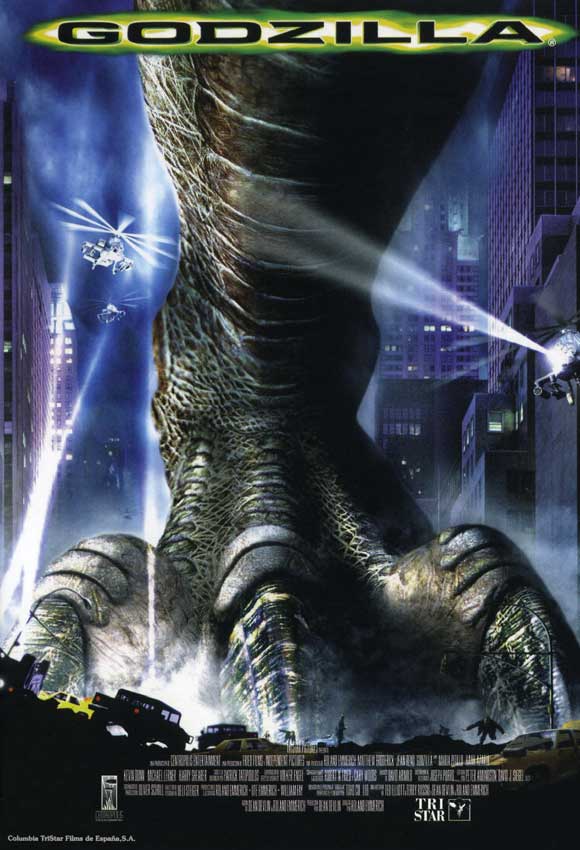
Godzilla Script (1998)

godzilla1

The new Godzilla movie doesn’t exactly have the best script, but what it lacks in writing it absolutely makes up for with Wow-factor.

If you enjoyed the new Godzilla, take a look at the script from the 1998 version written by Dean Devlin and Roland Emmerich to get a sense of why this Godzilla is such a huge success and the ’98 version was a dud.

May 20, 2014

Quote of the Day: Neil Gaiman

When people tell you something’s wrong or doesn’t work for them after reading what you have written, they are almost always right. When they tell you exactly what they think is wrong and how to fix it, they are almost always wrong.

May 19, 2014

Why You Should Write a Sh*tty First Draft

[This article was originally published on Talentville, an online community for screenwriters.]

by Angela Guess

These words should be a comfort to any writer, whether you’re starting your first short script or writing the final pages of your tenth screenplay. The first draft of ANYTHING is shit. Granted, your first drafts should get better as you become a more experienced writer and improve your story development process, but don’t ever think that you’ll get to a point where your first draft is good enough to be your final draft. It just doesn’t happen.

Why a Bad First Draft Isn’t Bad News

Now, you may be asking yourself, “Why is that comforting? That may be the most depressing thing I’ve ever heard.”

For those of us who dream of being struck by a brilliant idea and writing an award-winning script in a single day (a la Crash), sure, this news might come as a bit of a downer. But it should also be an immense relief.

May 19, 2014

Quote of the Day: W.P. Kinsella

Use your imagination. Trust me, your lives are not interesting. Don’t write them down.

May 16, 2014

The Lubitsch Touch

Ernst Lubitsch was a director in the golden age of cinema. He started directing films in Germany, then came to America during the peak of the silent era and directed some of the great classics of that time. He transitioned gracefully into the era of the talkie, but “the Lubitsch touch” has little to do with dialogue.

As Lubitsch.com defines it,

“The Lubitsch Touch” has long been the phrase used to describe the unique style and cinematic trademarks of director Ernst Lubitsch. But what exactly is “The Lubitsch Touch?”

According to film historian/critic Scott Marks, “The Lubitsch Touch” was a phrase concocted by studio PR men eager to turn a great director, Ernst Lubitsch, into a brand name. As Marks points out, “the label adhered, and to this day, critics still bandy it about, ever hoping to unlock the mysteries of its meaning.”

The website shares several definitions of what the Lubitsch touch is to a variety of filmmakers:

“The Lubitsch Touch” is a brief description that embraces a long list of virtues: sophistication, style, subtlety, wit, charm, elegance, suavity, polished nonchalance and audacious sexual nuance.” - Richard Christiansen

“A subtle and souffle-like blend of sexy humor and sly visual wit.” — Roger Fristoe

” . . . The Lubitsch Touch, with its frequent Freudian overtone of revealing previously hidden motivations, the sexual story, by an adroit bit of business or a focus on a significant object. The Lubitsch Touch signals to the audience that the old interpreter is at it again, letting us in on a priviliged perspective, embracing the audience as a co-conspirator of interpretation, an accomplice in the director’s and the camera’s knowingness.” - Leo Braudy

“It was the elegant use of the Superjoke. You had a joke, and you felt satisfied, and then there was one more big joke on top of it. The joke you didn’t expect. That was the Lubitsch Touch….” - Billy Wilder

May 16, 2014

Quote of the Day: David E. Kelley

When the stories come easily and the writing process doesn’t feel laboring, that’s usually a good sign for me.

May 15, 2014

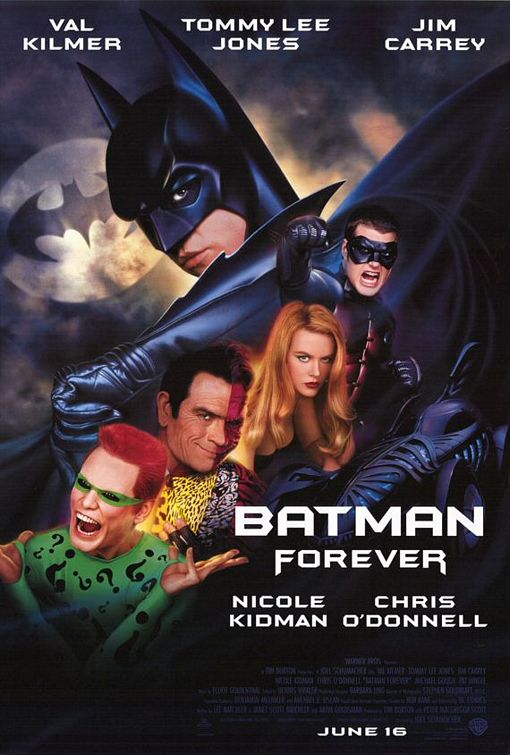
Batman Forever Script

batman_forever_ver7

The Batman Forever script was written by Akiva Goldsman.

May 15, 2014

Quote of the Day: Francis Ford Coppola

There can’t be art without risk. It’s like saying No Sex, and then expecting there to be children.