Iron Man 3 probably wasn’t the movie people were expecting, though: in an age where movie-goers are willing to embrace the idea of a serious and (at times) terribly bombastic Batman, you might have expected Marvel to poise one of their most popular superheroes similarly. Not so: Iron Man 3 emerged as one of the silliest superhero movies for a long time, and – for once – I mean that as a genuine compliment.
In the build-up to the release of Marvel 7th installment in its Cinematic Universe, the marketing department seemed intent on pushing this chapter as a darker, more existential outing – we were given a few glimpses of Tony taking a beating and dragging his broken armour through a bleak, snowing terrain. And yet Iron Man 3 is certainly the funniest Marvel movie yet, a sequel willing to embrace and subvert its comic book origins at once. And it’s a blockbuster in every sense of the word. As for the angst? Not so much. Dark Knight Rises it ain’t.
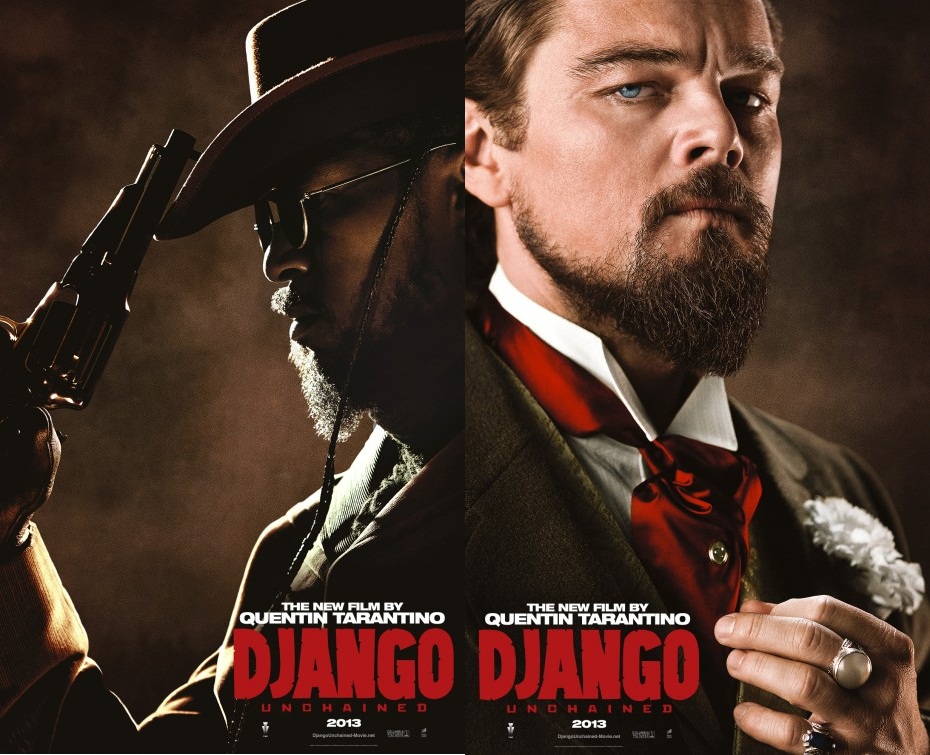
T.J. Barnard of WhatCulture recently shared ten screenwriting lessons any writer can learn from Django Unchained (the script). Django offers a number of positive examples of what to do, but also does a few things wrong, and T.J. expertly identifies those problems:
My experience with Django Unchained didn’t start with the finished movie: I read the screenplay a couple of years before when it got leaked online. At first I tried to resist, but the temptation was too great. Reading it, it struck me as a bit of a mess – in retrospect, “messiness” is a trait that most critical reviews (even the positive ones) picked up on. It also struck me as wildly imaginative, immensely fun to read, and packed to the brim with that great QT dialogue we all know and love.
Film.com has put together a wonderful list complete with video clips of the fifty best opening film scenes of all time. This list is Not America-centric, so you’re sure to come across several foreign films you haven’t seen. Look over the clips and Film.com’s review of each and get inspired to write a groundbreaking opening scene of your own.
Here are the top five films on the list:
5.) “Touch of Evil” (Orson Welles) 1958
The nearly wordless opening shot of Orson Welles’ other other *other* masterpiece is arguably more famous than the film it portends, a 200-second tracking shot that begins with an adorably old-fashioned bomb being planted in the trunk of a car, and ends with a bang (and a kiss). A self-contained (but not self-serving) masterpiece of cinematic suspense, the elaborately choreographed tracking shot is made all the more impressive by how firmly it anchors the nihilistic noir that follows. It may not be the cinema’s most impressive long shot anymore (thanks, “Russian Ark”), but it’s still the most perfect (except for that whole Charlton Heston in brownface thing). – DE
It’s probably the most common complaint I hear from people after they see a movie: “It was a good movie, but I hated the ending.” It has always confused me because most of the writers I know tend to start off writing their scripts already knowing how it begins and how it end. So why then is it so common to hear audiences bemoan some variation on this theme? Simply put, there’s a difference between having an idea for a great ending and writing a satisfying one.
There are no hard and fast rules of screenwriting (formatting rules aside), but there are a number of key factors that readers look at to determine whether or not your script will be worth the full read within minutes of picking it up. Ray Morton of Script Mag has listed out the 12 key signs of a promising script:
Professional script readers will often claim that they can tell if a screenplay is going to be good or not after reading just a few pages. This is true – for me, anyway.
Granted, I can’t assess every single nuance of a script’s story in just five or ten or pages, but by assessing twelve specific elements, I can tell if the story, characters, and dialogue have potential and if the writer has the ability to pull off whatever it is she/he is attempting. Here are those twelve elements – those twelve signs of a promising spec:
1. The script is short – between 90 and 110 pages: The average length of a feature film is between 100 and 120 minutes (yes, I know that a lot of modern movies run longer than two hours, but those films are usually the result of self-indulgent directors abusing their right to final cut and does not reflect a desire on the part of the industry at large to make longer movies – studios and theater owners still prefer pictures to be two hours or less so that they can screen them as many times a day as possible and so want screenplays sized accordingly.
So you think that bad guys can only be Antagonists? Think again. They’re just as multi-faceted as the good guys these days. One day, when you least expect it, you’ll realize the script idea rolling around in that brain of yours is crying out to have a bad guy protagonist at the heart of the story. But how do you put someone like that at the center of your script and expect the audience to go along for the ride? Audiences like to cheer for the good guys, right? Actually, what they really like to cheer for is a character with whom they identify. On some level – any level – if the audience can catch a glimpse of themselves inside the character, then you’re golden.
Erik Bork has written an excellent article in which he discusses his creative process and lists 15 types of inciting incidents, including films that they occur in. The list is very much like Blake Snyder’s ten film genres and can be used similarly to help you brainstorm your next brilliant script.
Here’s the list:
The thing that has defined you and/or supported you (key to your identity, mission, sense of self, well being, etc.) is suddenly taken away or threatened… Jerry Maguire, Toy Story, Bridesmaids, About a Boy, My Best Friend’s Wedding, Legally Blonde, Elf, Enchanted, The Godfather
A new mission emerges to help someone,which seems like the necessary and right thing to do, but will clearly come with some major challenges… Clueless, The Sound of Music, Erin Brockovich, The Sixth Sense, Schindler’s List, The Hangover, Dave
You get an opportunity to possibly do the thing you’ve always wanted to do – which may seem too good to be true, and will be really difficult to succeed at… Almost Famous, Boogie Nights, Working Girl, Tootsie, Willy Wonka and the Chocolate Factory
Here are over 300 writing prompts to get you writing. They won’t all lead you to your next big idea, but they’ll get you writing, and that’s always the first step.
If you’re going to fail as a writer, then you might as well get it over with now. Then you can focus on your day job and watch television all night. The following 3 keys are guaranteed to unlock the door to instant failure and free you to flop like a floundering fish on the floor.
1. Just say no
Why didn’t you think of this before? Stop writing. It’s as simple as that. Wait for huge blocks of time to open up, and refuse to write until they do. Now that’s commitment! Don’t touch that keyboard until your Muse flies down from Mount Parnassus to reveal the 101 master plots. Failure comes to those who wait.
There are probably hundreds of signs that the writer of that script I’m screaming at is an amateur. But today, I’d like to give a mere 50. Most of these may seem like common sense, yet you’d be amazed at the sheer number of projects plagued with these issues. Some of them may make you worry about your own work. But hey, at least you’ll know for next time and you’ll be one step closer to making sure your work is at the highest of professional standards.
The following is in NO particular order and covers a broad range of script issues.
Writing CUT TOs, FADE TOs, FADE OUTs, or any other Transition between every scene.
Telling us instead of Showing us.
Description is in past tense instead of present tense and does not use the active form of the verb. For example, John drives - not John is driving. Danny stands - not is standing. No -ING verbs.
Not using pronouns or articles in your sentences. THE room, HIS dog, HER chair. You don’t walk into room - you walk into THE room or A room.
Having wordy description paragraphs longer than 4 lines on a page without a line break.
Not CAPITALIZING your characters names the first time we meet them in your description. Or capitalizing characters names every time they’re seen or mentioned.
Capitalizing every noun and/or verb in your description.
Not having a new scene heading for every new location or writing things in your scene heading other than the location, time of day and relation to the previous scene
Your description tells us exactly what your characters are thinking or are about to discuss in dialogue, or tells us backstory the audience cannot see.
The script is written in Microsoft Word, Notepad or Celtx.
Not knowing the difference between a Montage and a Series of Shots. A Montage condenses numerous scenes, locations and the passage of time while progressing the plot and character arcs. A series of shots is a visual style to show many different actions or specific visuals all from one scene or a short time span.
Having Camera Direction in your description (“we see”, “shot of”, “camera pans” etc)
Writing parentheses before dialogue on every page explaining the emotion or how the line should be said.
You are not using “Intercut With” when going back and forth between two scenes instead of restating the scene heading each time.
Lengthy location descriptions or too much production design - we don’t care what color the couch is.


 T.J. Barnard of WhatCulture! has written another great “10 Lessons” article. This one is about Iron Man 3, which was penned by the infamously well-paid Shane Black. Here’s a snippet of what Barnard has to say: